9 Names of Shri Krishna and the Stories Behind Them
Lord Shri Krishna is one of the most beloved deities in Sanatan Dharma. Revered as the eighth incarnation of Lord Vishnu, Krishna is worshipped for His divine wisdom, compassion, courage, and playful nature. His life, as described in the Bhagavad Gita, Mahabharata, Bhagavata Purana, and other sacred texts, continues to inspire millions around the world.
Each of Krishna's names reflects a unique aspect of His personality, divine qualities, or significant events from His life. Let's explore the meanings and stories behind nine of His most cherished names.
1. Govinda (गोविन्द)
Meaning: Protector of Cows and the Senses
The name Govinda comes from the Sanskrit words Go (cow, earth, or senses) and Vinda (protector or finder). Lord Krishna earned this name by lovingly caring for the cows of Vrindavan and protecting the people from danger.
One famous story is when Krishna lifted the Govardhan Hill on His little finger for seven days to protect the villagers from torrential rains sent by Lord Indra. After this divine act, the gods honored Him as Govinda.
Life Lesson: True leadership means protecting and serving others with compassion.
2. Gopala (गोपाल)
Meaning: Protector of Cows
As a child in Gokul and Vrindavan, Krishna spent His days grazing cows with His friends. His love and affection for every living being made Him known as Gopala.
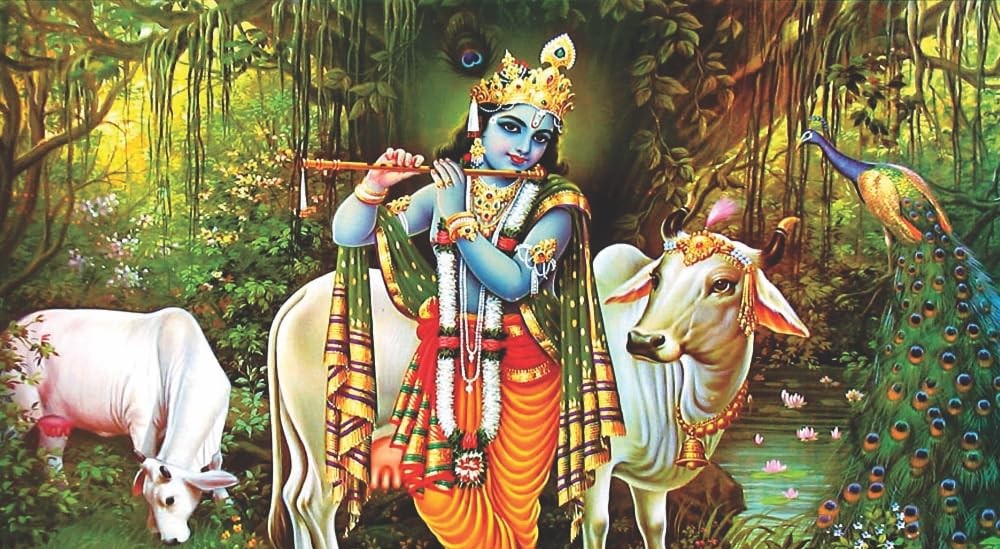
The image of young Krishna playing the flute while surrounded by cows remains one of the most cherished symbols of devotion.
Life Lesson: Simplicity, kindness, and love for nature are signs of true greatness.
3. Madhava (माधव)
Meaning: Descendant of the Madhu Dynasty or Lord of Knowledge and Prosperity
The name Madhava has multiple meanings. It signifies Krishna's royal lineage and also represents sweetness, wisdom, and divine grace.
Devotees chant this name while seeking peace, prosperity, and spiritual wisdom.
Life Lesson: True prosperity begins with inner peace and wisdom.
4. Keshava (केशव)
Meaning: Slayer of the Demon Keshi
When the demon Keshi, sent by King Kansa, attacked Vrindavan in the form of a gigantic horse, Krishna bravely defeated him.
After this victory, the sages and gods praised Him as Keshava, meaning the conqueror of Keshi.
Life Lesson: Courage and righteousness always triumph over evil.
5. Murari (मुरारी)
Meaning: Enemy of the Demon Mura
Lord Krishna defeated the powerful demon Mura, who had terrorized the heavens. This victory earned Him the name Murari.
The name symbolizes Krishna as the destroyer of ignorance and negativity.
Life Lesson: With faith and determination, obstacles can be overcome.
6. Damodara (दामोदर)
Meaning: The One Bound by a Rope
One of Krishna's most heartwarming childhood stories involves His mother, Yashoda.
After Krishna playfully stole butter and created mischief, Yashoda tied Him to a wooden mortar with a rope. Although He is the Supreme Lord, Krishna allowed Himself to be bound by His mother's love.
This beautiful incident gave Him the name Damodara, where Dama means rope and Udara means waist.
Life Lesson: Pure love has the power to bind even the Divine.
7. Vasudeva (वासुदेव)
Meaning: Son of Vasudeva
Krishna was born to Vasudeva and Devaki in the prison of Mathura.
Although He was secretly taken to Gokul for protection, His birth name remained Vasudeva, honoring His father.
The name also signifies the Divine Being who resides in every heart.
Life Lesson: Our true identity is rooted in divine consciousness.
8. Janardana (जनार्दन)
Meaning: Protector of Humanity
The name Janardana means "the one who removes the suffering of people."
Throughout His life, Krishna guided kings, sages, warriors, and ordinary people with wisdom and compassion.
His teachings in the Bhagavad Gita continue to inspire humanity to perform righteous actions without attachment to results.
Life Lesson: Selfless action and wisdom lead to lasting peace.
9. Shyam (श्याम)
Meaning: The Dark-Complexioned One
Krishna's complexion is traditionally described as dark like a rain-filled cloud, symbolizing infinite beauty, mystery, and compassion.
The name Shyam is especially popular among devotees because it reflects Krishna's loving and enchanting personality.
His flute, smile, and divine presence attracted everyone, from the Gopis of Vrindavan to saints and devotees across generations.
Life Lesson: True beauty lies in character, kindness, and devotion.
Why Does Lord Krishna Have So Many Names?
Every name of Lord Krishna represents a different aspect of His divine personality:
- His childhood (Gopala, Damodara)
- His courage (Keshava, Murari)
- His compassion (Govinda, Janardana)
- His wisdom (Madhava)
- His family lineage (Vasudeva)
- His divine beauty (Shyam)
Each name reminds devotees of Krishna's teachings, virtues, and timeless stories.
Spiritual Importance of Chanting Krishna's Names
Devotees believe that chanting Krishna's holy names with devotion can:
- Bring peace of mind
- Increase devotion (Bhakti)
- Reduce stress and anxiety
- Strengthen faith
- Inspire righteous living
- Foster compassion and positivity
Many devotees chant names such as "Hare Krishna," "Govinda," "Gopala," and "Radhe Krishna" during prayer and meditation.